As part of her year-long research for Into the Seeds of Time, artist Vivienne Schadinsky interviewed Kevin Martin, Head of Tree Collections and Arboriculture at the Royal Botanic Gardens Kew, whose work on climate-resilient urban trees is grounded in decades of practical experience and ecological insight. His perspective offers not just technical knowledge but a deep sense of responsibility for the land, for future generations, and for the urban ecosystems that are under increasing pressure from climate change.
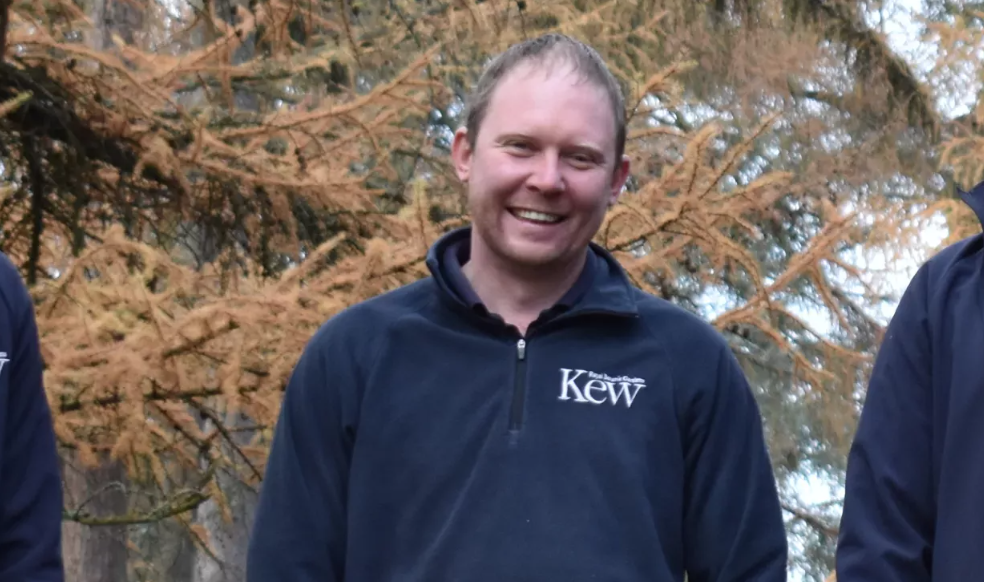
One of the key takeaways from Kevin’s reflections is the urgent need to safeguard urban canopy cover. In the context of shifting climates, this isn’t simply about planting more trees, it’s about planting the right trees, species that can withstand prolonged periods of drought, increasing heat, and the extreme fluctuations that define our emerging environmental reality.
Kevin and his team have focused on sourcing material from regions such as the lesser and greater Caucasus, Central Asia, and continental climates where winters reach -20°C and summers bring intense dry heat. Their work is not speculative; it's built on historical success. Many of the species they are testing, including Quercus castaneifolia, Parrotia persica, and Salvia carphologia, have been part of the Kew collections since the 1850s and have already proven to be well-adapted to UK conditions.
A recurring theme in the conversation was collaboration. Kevin highlighted the increasing global momentum among botanic gardens and research institutions across the UK, Europe, the US, and Australia to share data, plant material, and insights. Through platforms like BGCI (Botanic Gardens Conservation International), the research conducted at Wakehurst is becoming part of a larger, international movement focused on climate adaptation and biodiversity resilience.
Despite the progress, Kevin remains realistic. The work is still in its early stages, and much remains to be discovered about how species will respond long-term. However, he expressed hope that within the next five years, new strategies for sustainable urban planting will begin to take shape, strategies informed by the trials and insights already underway at sites like Wakehurst.
Underlying Kevin’s observations is a broader ecological philosophy: that no ecosystem is safe from rapid climate shifts. Every habitat, no matter how remote or seemingly stable, is vulnerable. In this context, botanic gardens and arboreta will play a critical role in selecting, preserving, and redistributing genetic material suited for resilience.
Perhaps most powerfully, Kevin stressed the need to engage the next generation. In recent years, interest in horticulture and environmental work has waned. For efforts like these to continue, we need to inspire young people with the urgency and possibility embedded in this work, not only to understand nature but to actively shape a livable, biodiverse future.