This month, we’re pleased to share the work of Arran Gregory, an artist whose practice unfolds at the meeting point of body, landscape, and material.
Working across sculpture and site-responsive installation, Gregory’s approach is both physical and philosophical, rooted in a deep engagement with the natural world and a desire to rethink our place within it.
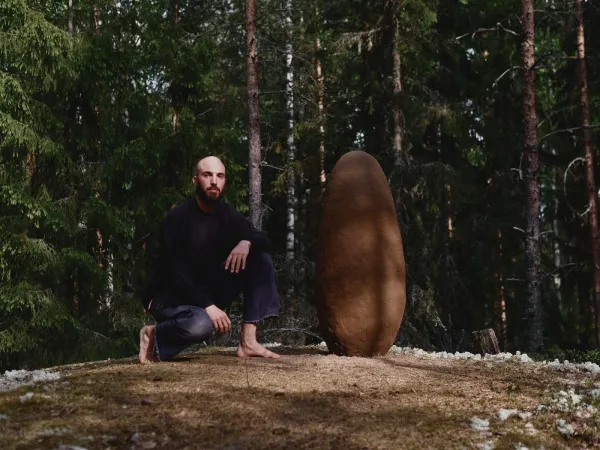
This month, he brings his practise to OmVed Gardens with two events you won't want to miss:
Sensing Earth: A Meditation in Clay & Sound Bath
Wed 15 July, 6:30–8pm
A sound bath and live earth drawing with sculptor Arran Gregory and sound journey artist Joe Dalziel. Listen deeply. Let the space respond. Open to all. Book here.
Workshop: Rammed Earth — A Bio-Sculpture
Sun 26 July, 10:30am–1pm
Work with your hands and the soil itself to build a rammed earth head sculpture — a living, collective work that will be placed in the gardens and evolve with the seasons. Book here.
A Practice Rooted in Experience
Gregory is a British-Sri Lankan artist whose work has evolved from studio-based sculpture into a more immersive, land-led practice.
In recent years, he has spent extended periods living and working in remote environments —from Nordic forests to tropical landscapes— where his process becomes inseparable from the conditions around him. These experiences form the foundation of his work, shaping not only what he makes, but how and why he makes it.
Working With the Land
At the core of Gregory’s practice is a commitment to natural materials and intuitive processes.
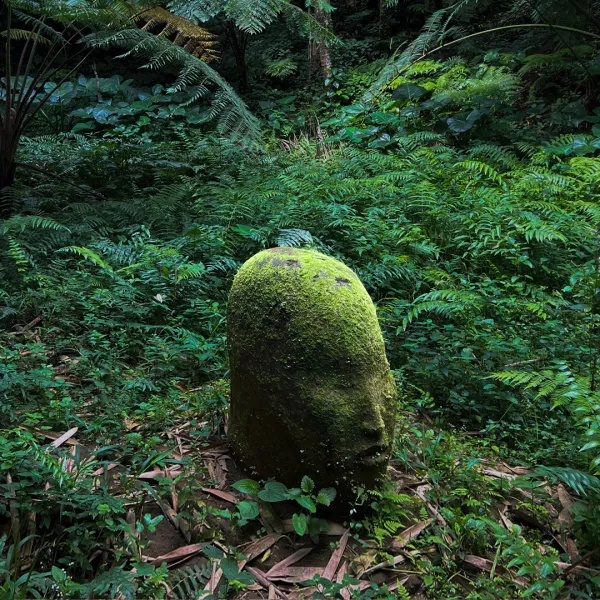
Using clay, earth, sand, and found elements, he creates forms that feel both ancient and immediate. His sculptures are often built directly within the landscape, shaped by hand and left to exist in dialogue with the elements, subject to weather, time, and gradual transformation.
Rather than resisting change, the work embraces it. Cracks, erosion, and growth are not seen as flaws, but as continuations of the process.
Body, Perception, and Connection
Gregory’s work explores the relationship between the human body and the wider ecology it belongs to.
His sculptures often suggest fragments of form —at once human and geological— blurring the boundaries between figure and environment. Through this, he invites a shift in perception: away from seeing ourselves as separate from nature, and toward recognising a more interconnected, embodied experience.
A Living Process
For Gregory, making is not confined to the studio or the final object.
It is a continuous process of listening and responding: to place, to material, and to the rhythms of the natural world. Periods of solitude and disconnection from modern systems play a vital role in this, allowing space for a different kind of awareness to emerge.
In this sense, the work becomes less about outcome and more about presence.
An Invitation to Reflect
In a time where speed and permanence often define how we build and create, Gregory’s practice offers an alternative perspective.
His work reminds us of the value of impermanence, of working with rather than against natural forces, and of re-establishing a sense of connection to the environments we inhabit.
It is, ultimately, an invitation, to see differently, to feel more deeply, and to return, even briefly, to a slower way of being.