We’re delighted to welcome Éamonn Ó Hairtnéada as OmVed Gardens’ Artist of the Month this April
Éamonn is an Irish/Dutch visual artist, horticulturalist, and craftsperson based in Devonshire, England. With a background in art and an MA in Regenerative Economics from Schumacher College, his work explores ecological and regenerative narratives through the material language of weaving. Drawing on traditional craft practices, farming knowledge, and land-based skills, he uses woven forms as both tools and metaphors for interconnection, care, and cyclical thinking.
His practice resonates closely with our 2026 theme, Listening as Care: paying attention to materials, land, and inherited knowledge systems. Through slow making and reviving traditional techniques, Éamonn’s work reminds us that listening can happen through the hands as much as through the ears.
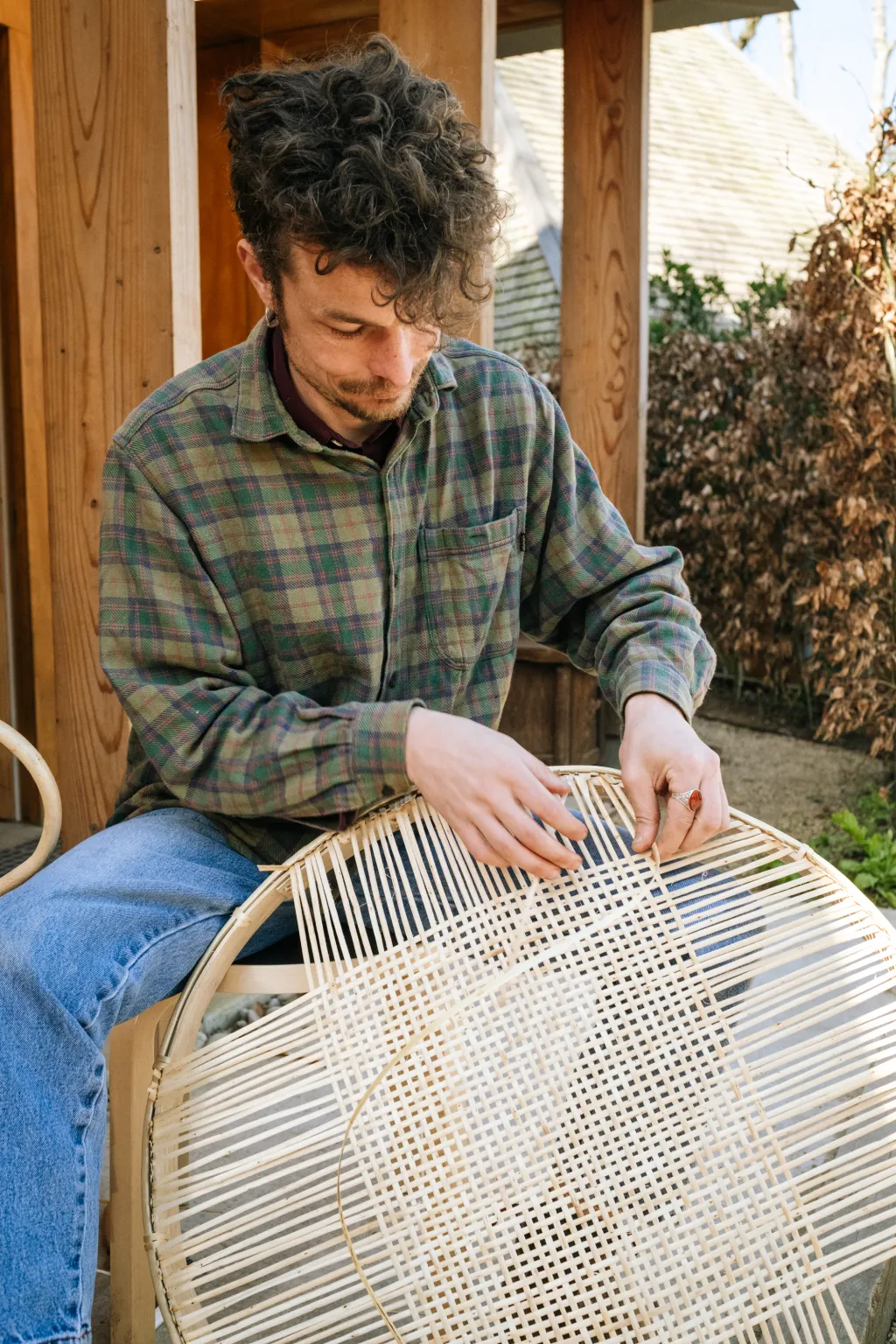
As part of the programme, Éamonn joined us during our Spring Seed Swap, where he shared his current research on seed baskets and offered live demonstrations of traditional agricultural tools. Visitors were able to see his European scuttle weaving technique, historically used to make winnowing fans for separating wheat from chaff, as well as his traditional Irish ash riddles used to sift oats and barley.
In May, Éamonn will return to OmVed for an artist talk around his project The Interwoven Garden (Saturday 16 May, tickets available here), and will also lead a specialised hands-on workshop exploring weaving traditions and leading participants to create a contemporary bioregional backpack working with locally grown and processed skeined willow (Saturday 30 and Sunday 31 May, tickets available here).
Join us to meet the artist, experience these living craft traditions, and reflect on the ways knowledge is carried through land, seed, and making.
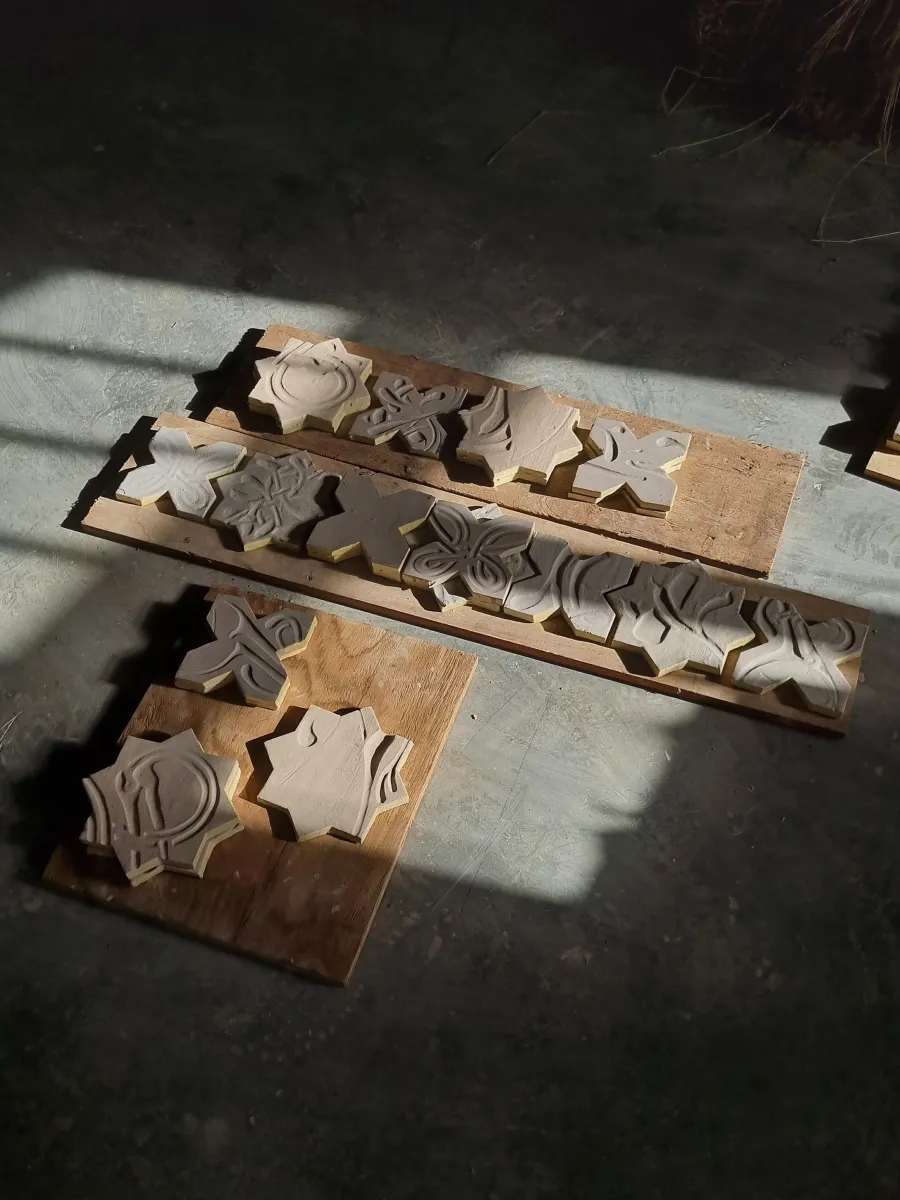
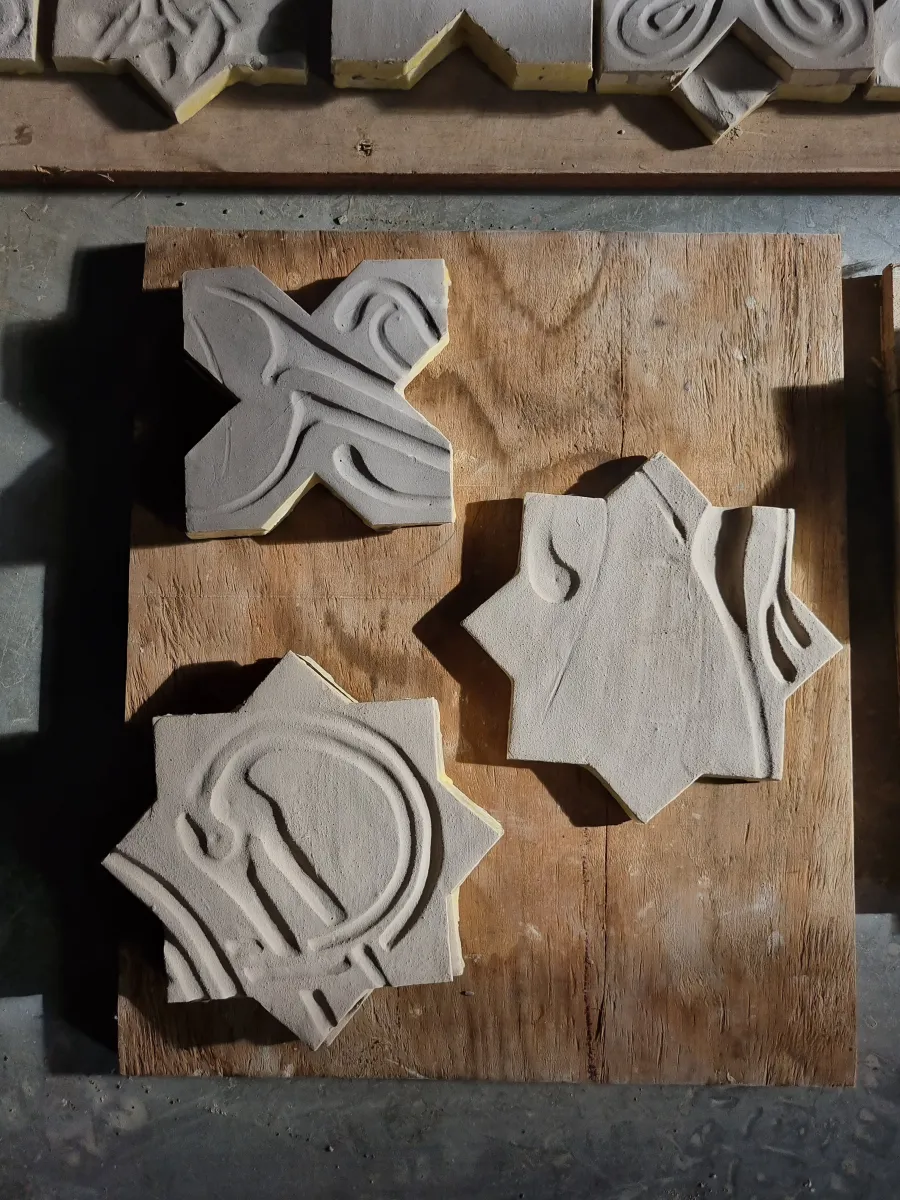
Below is a selection of the artist's work spanning weaving, experimental garden design and tile-making.
Nightjar burial caskets
O’ Hairtneada’s burial caskets are made from curvatures of naturally grown hedge hazel and split willow weavers; mirroring the dappled shade of hedgelines, as well as the patterns of the rural living nightjar bird. These burial caskets with their short life-spans are a form of temporary social sculpture eploring the edges of burial life and death.
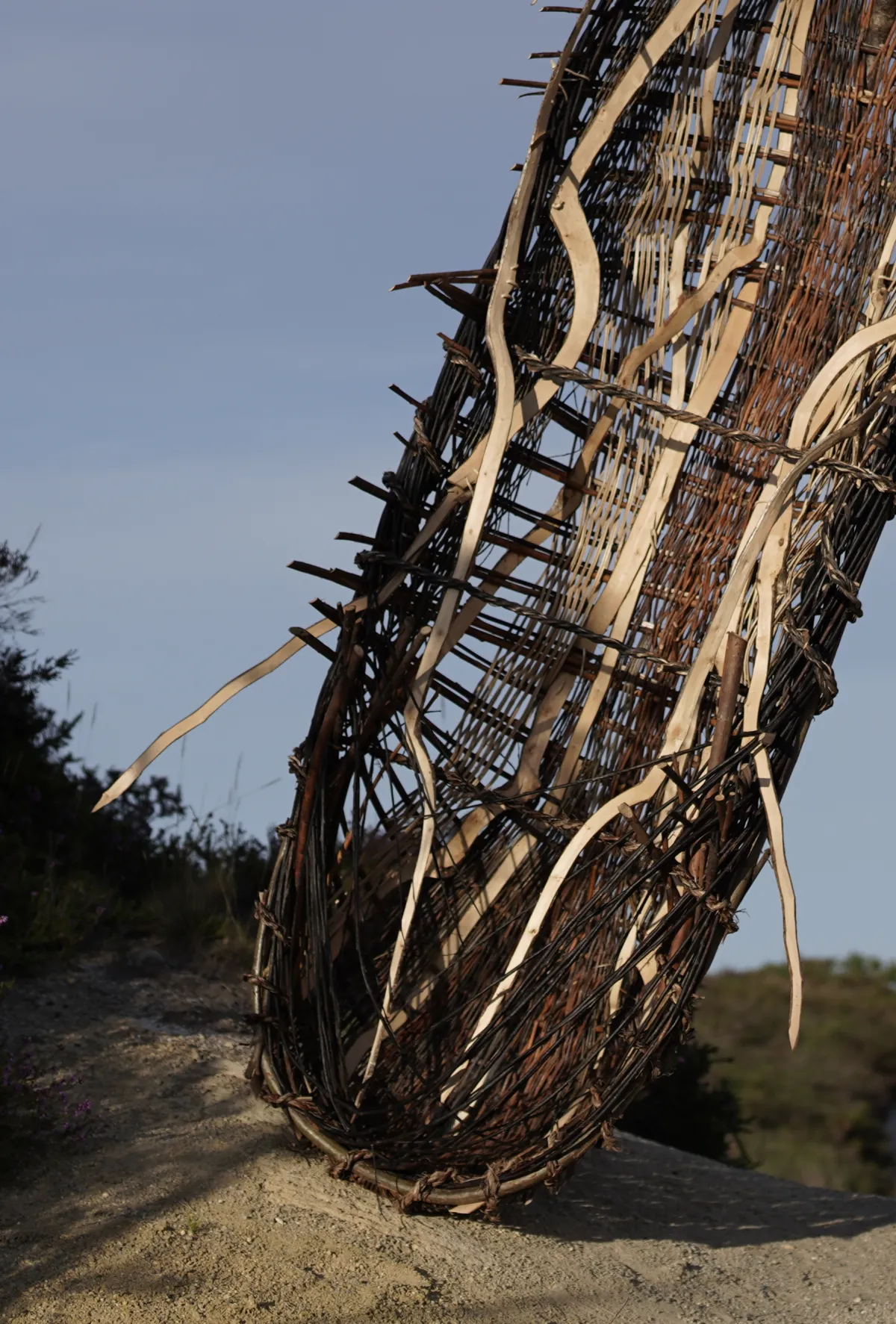
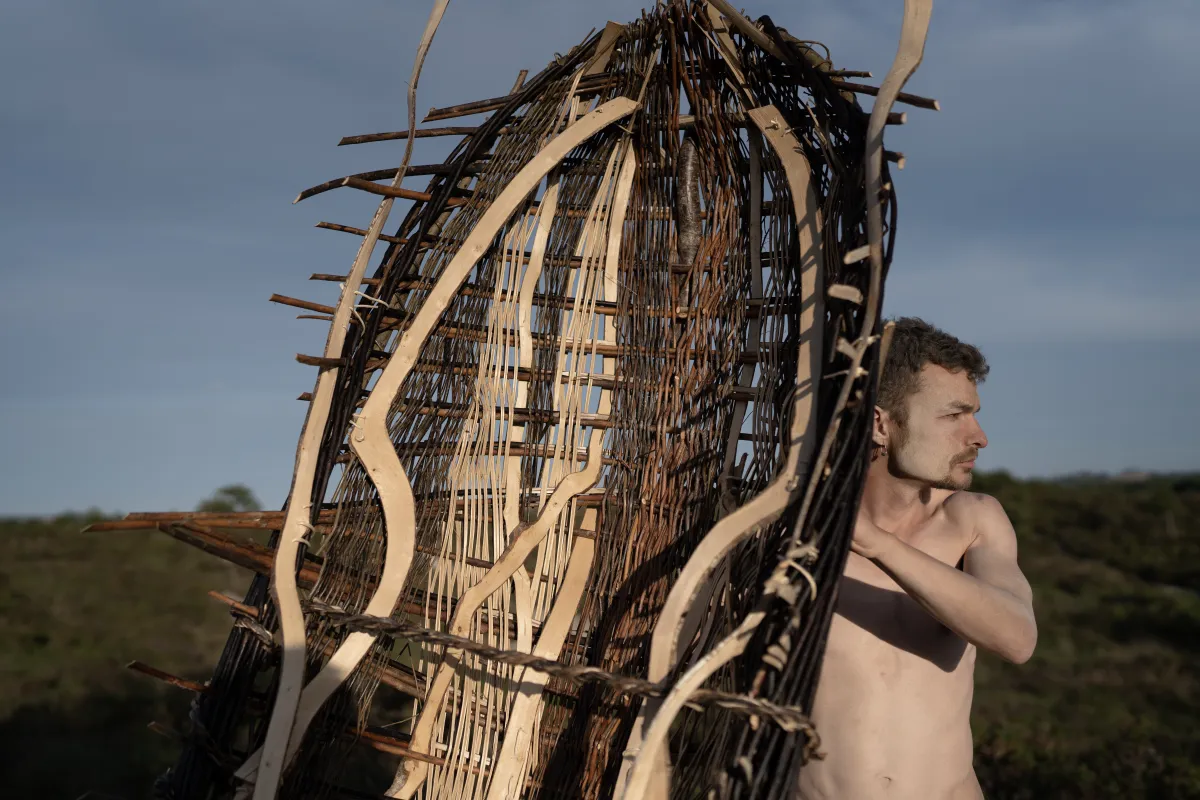
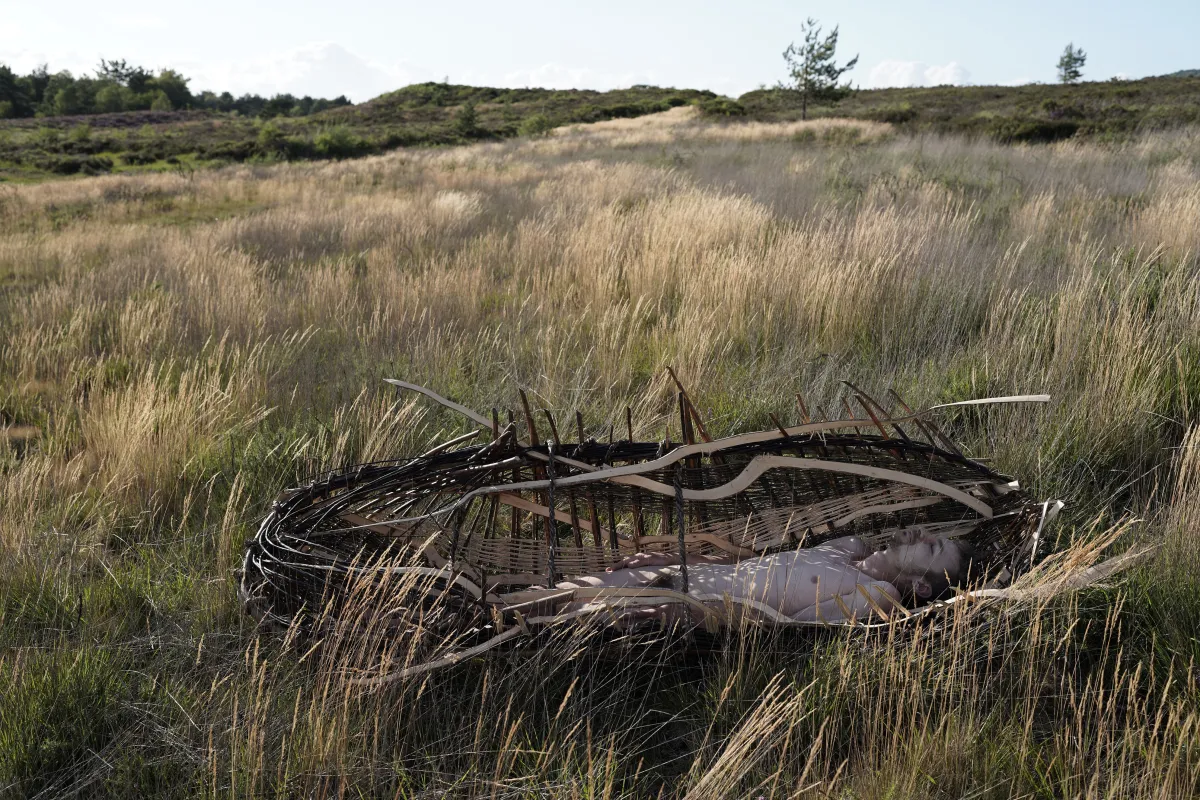
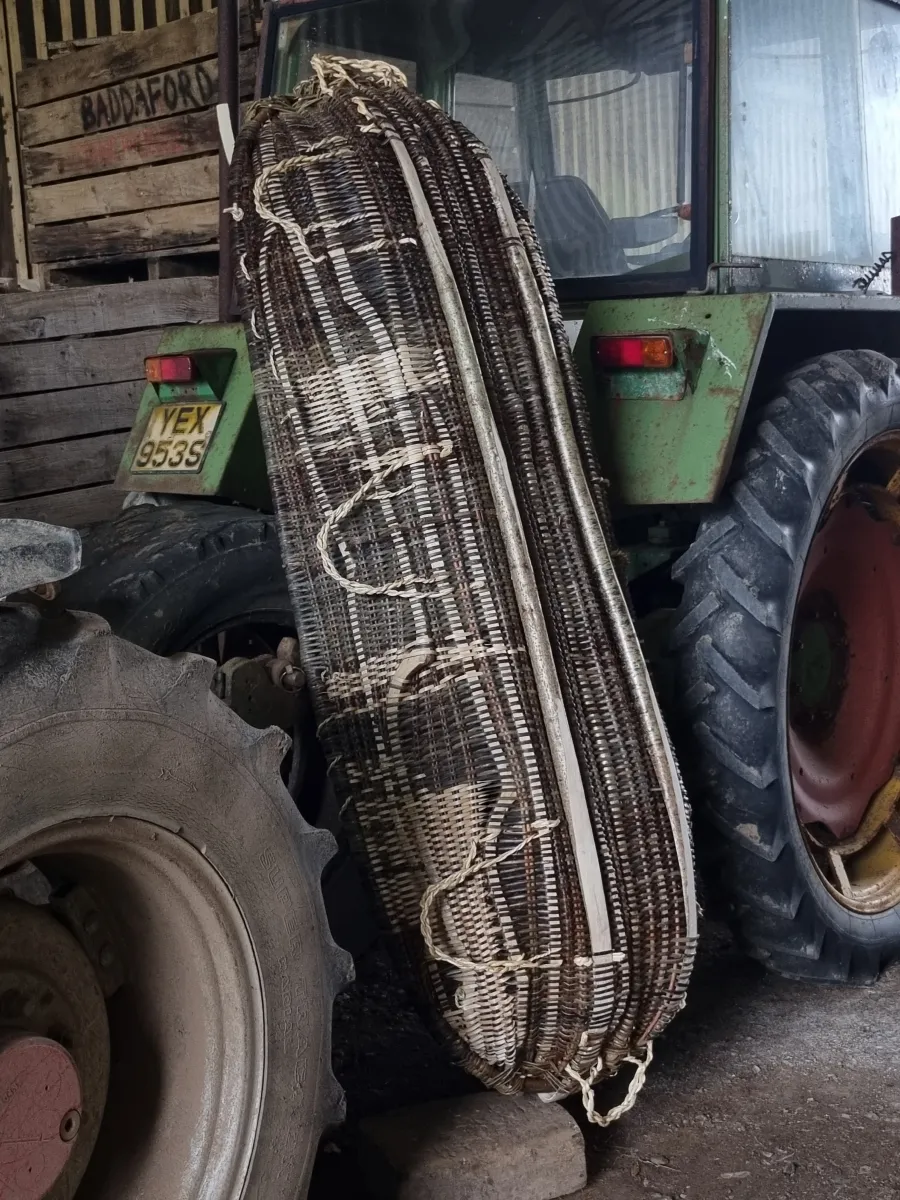
Images by Tyler Freeman Smith
The Interwoven Garden is a semi-public garden for exhibition space Woonhuis/De Ateliers, The Netherlands and draws on inspiration from Dutch, Irish and Persian craft traditions.
Encased by the weave, or “𝘛𝘶𝘶𝘯”; the Dutch word for woven boundary. The garden is inspired by concepts of border; the hortus conclusus and the walled Persian paradise gardens, as well as the obsessive oak forest sowing Jays; who play in this inner city garden.
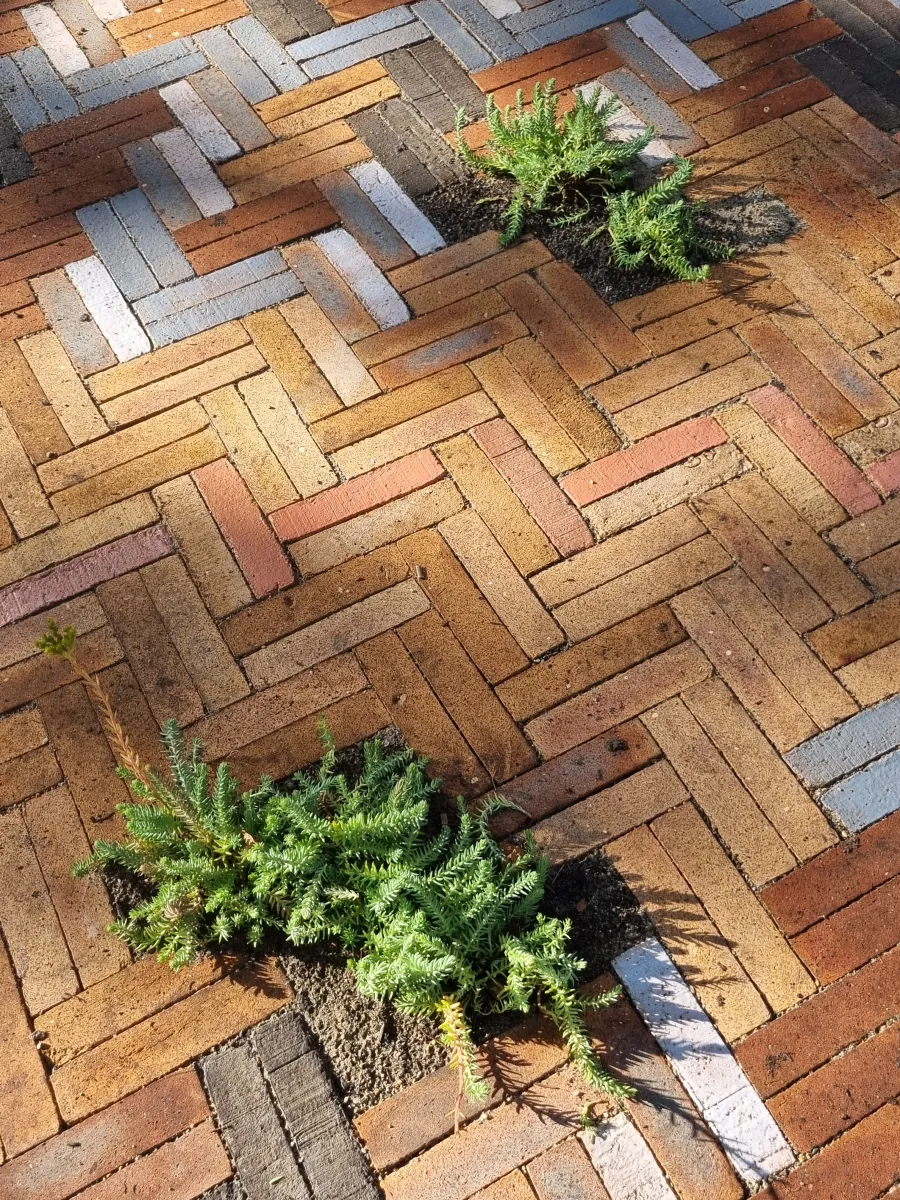
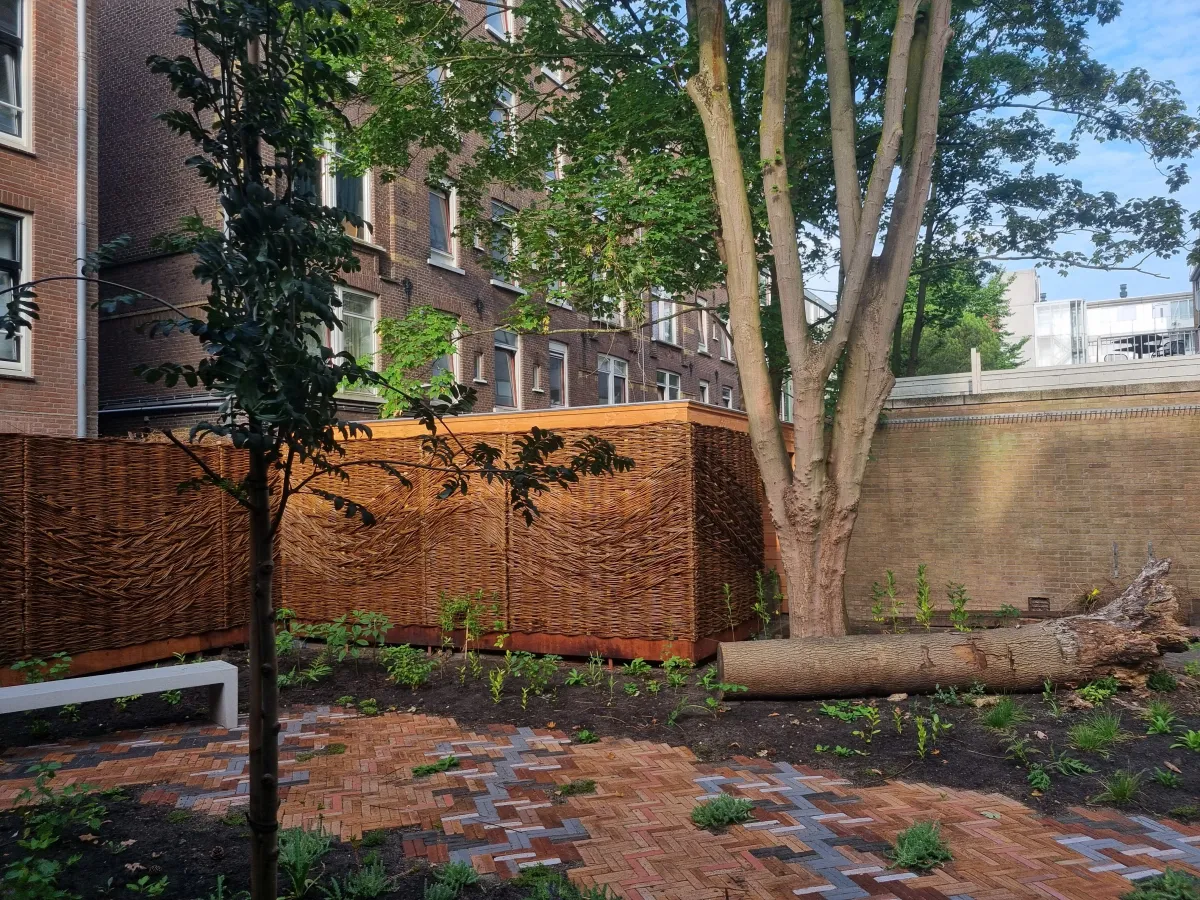
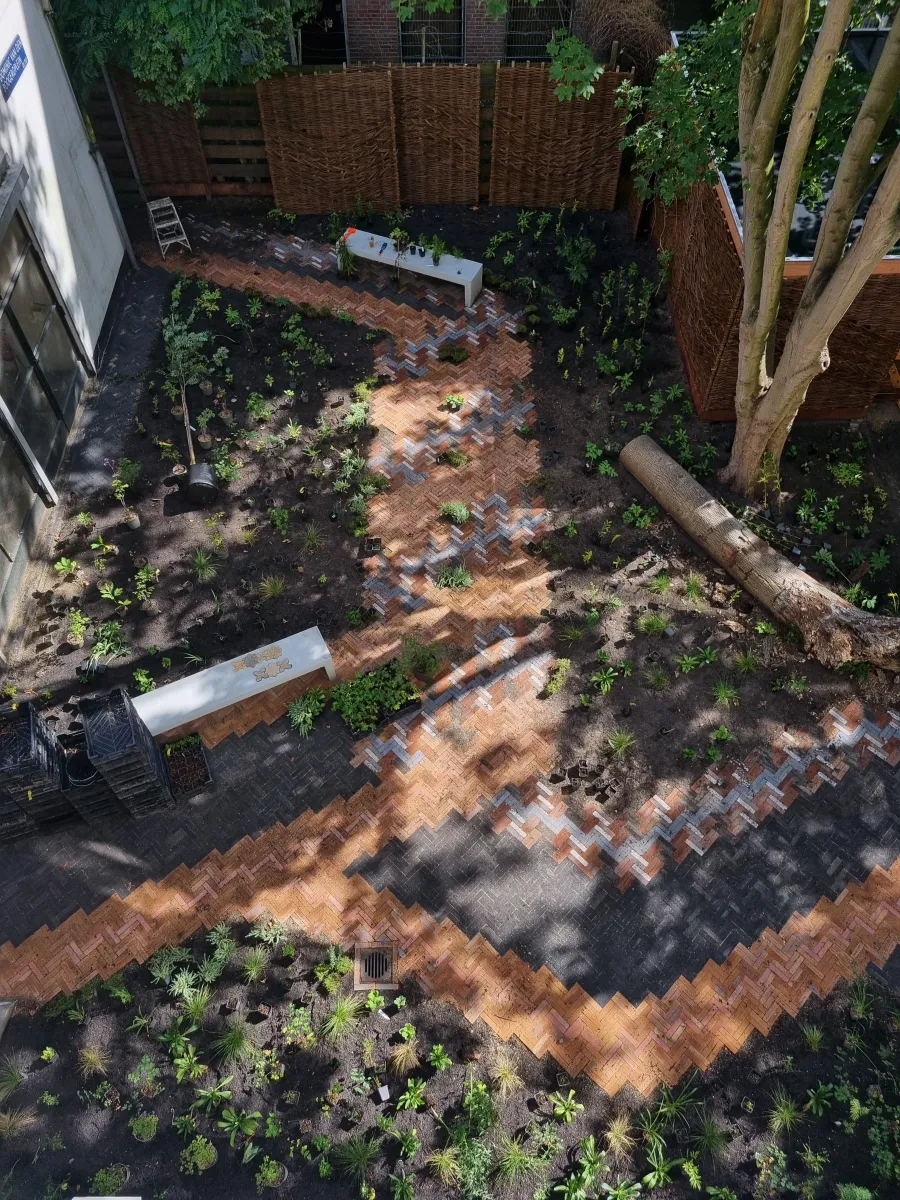
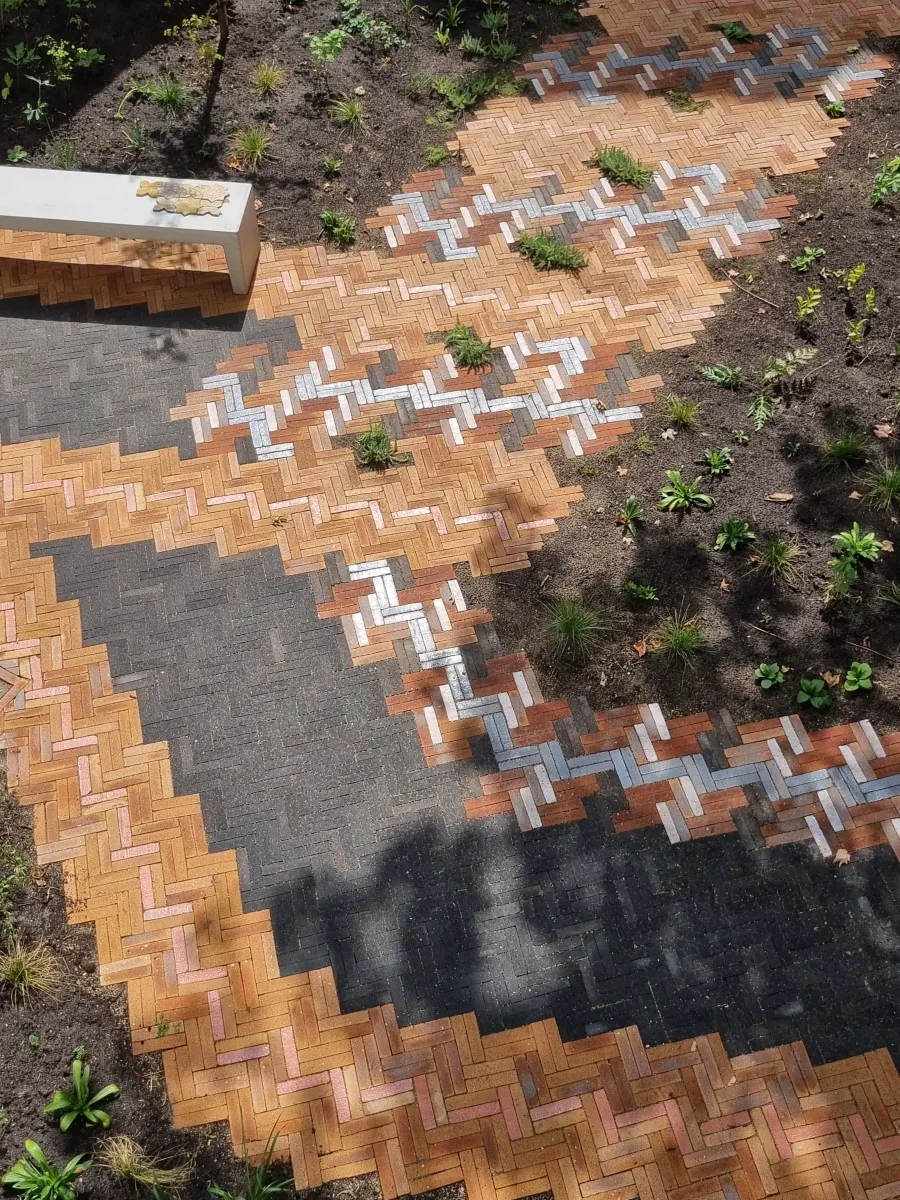
The Interwoven Garden
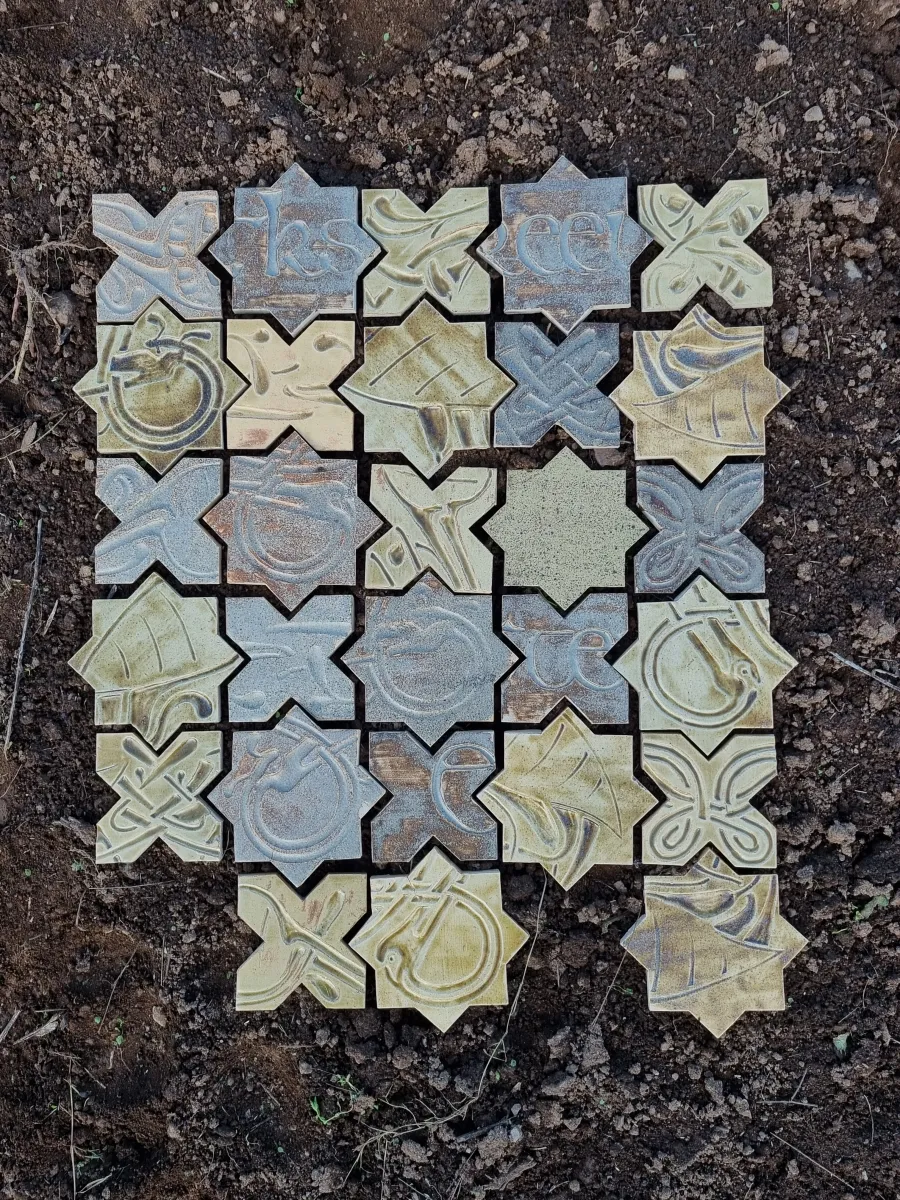
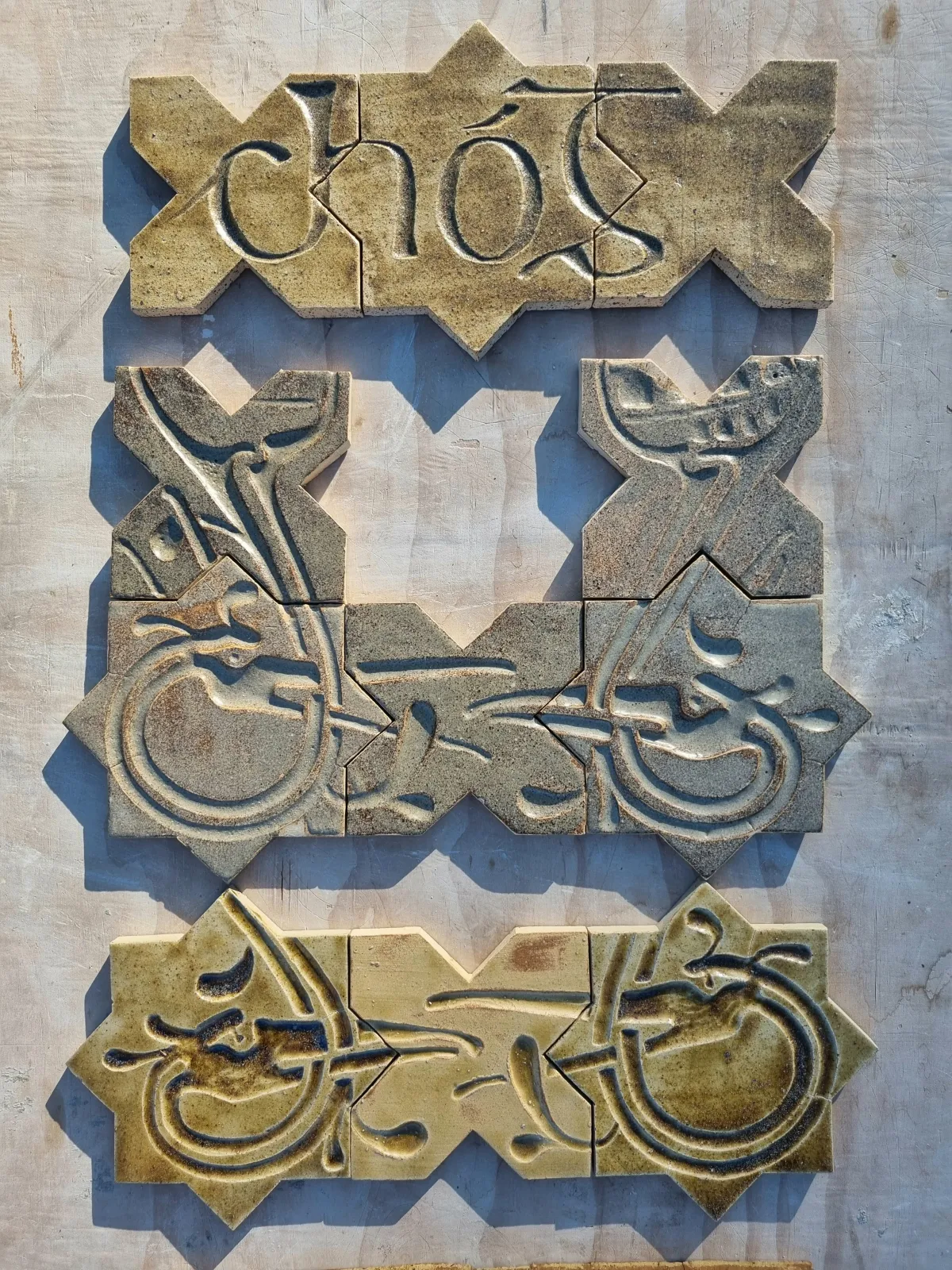
Craft and Ceramic Tiles for The Interwoven Garden
The Interwoven Garden brings together three interconnected forms of craft: ceramic-tiled garden benches made from hand-dug clays and ash glazes; decorative willow fencing; and pathways constructed from recycled and glazed brick.
At its heart, the garden is a homage to the hands of the craftmaker - traditionally a mediator between art and nature - and a figure deeply rooted in the labour of the land. It stands in solidarity with the maker, whose effort, endurance, and physical engagement become an ode to materiality itself.
The tiled benches draw inspiration from Persian rugs, historically laid out within Persian gardens as places of rest and gathering. Their forms echo Islamic tile geometry, while their surfaces are overlaid with patterns of wild geese adapted from the Lindisfarne Gospels, a Christian illuminated manuscript. In this way, the benches interweave cultural references, materials, and traditions—mirroring the garden’s broader dialogue between landscape, craft, and history.