As part of the research for Into the Seeds of Time, Vivienne Schadinsky invited a range of voices rooted in ecological thinking and practice to share their lived experiences with beans, cultivation, and regeneration. Among these voices is Perry Haldenby, a soil biologist, full-time grower, and consultant. Perry’s deep knowledge of soil ecology is matched by an infectious passion for care, for earth, for biology, and for the quiet systems that sustain life.
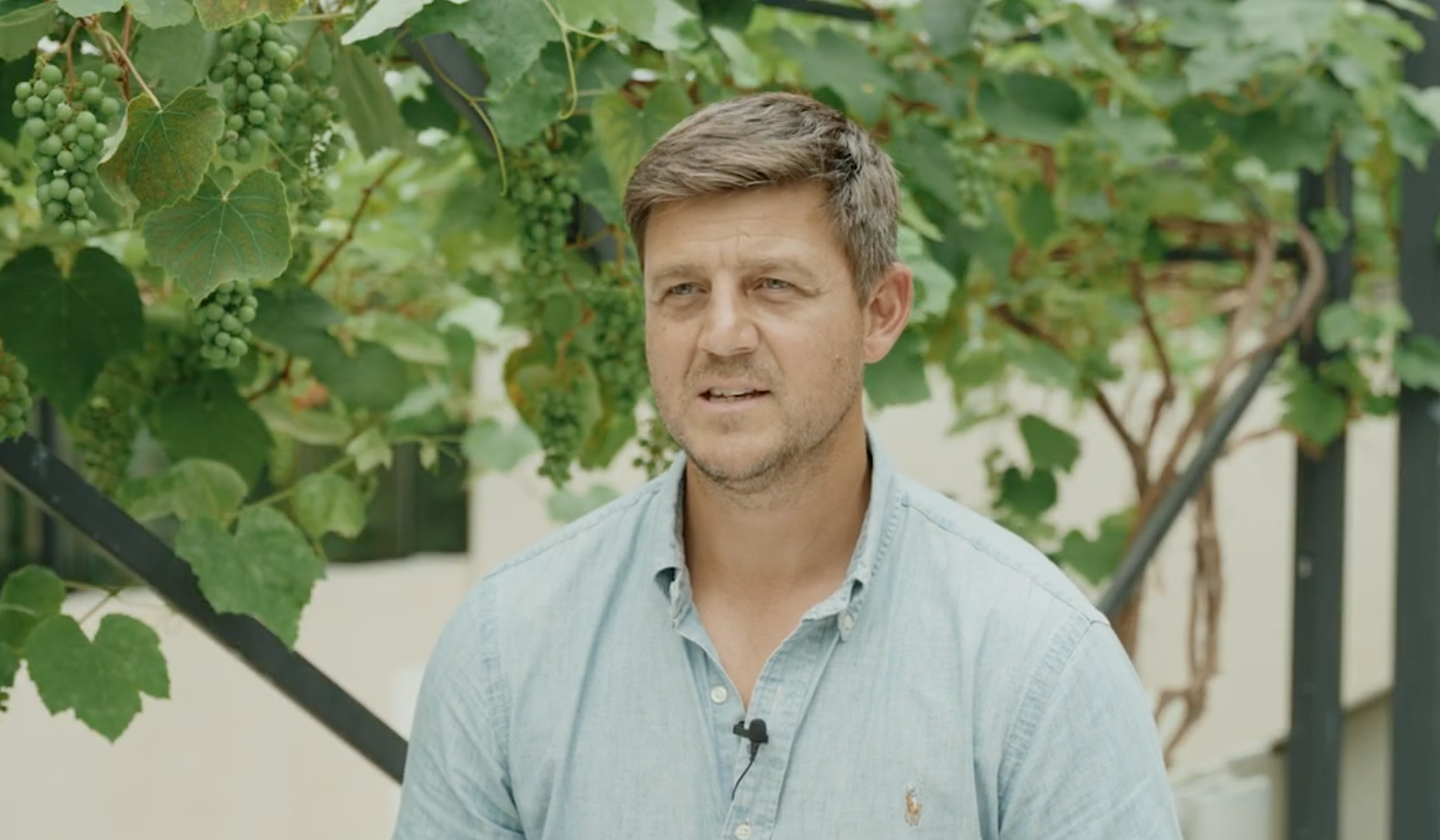
In this interview, Perry draws us into the invisible universe beneath our feet, revealing soil as a dynamic, living network. His insights paint soil as a layered system composed of physical materials (sand, silt, clay), organic matter, and most crucially, microbial life. This “soil food web” includes bacteria, fungi, nematodes, and protozoa, organisms that not only structure the soil but regulate its capacity to nourish plants, sequester carbon, and support broader ecological health.
Perry’s reflections carry both scientific grounding and emotional depth. He speaks of soil color: how a rich 70% cacao hue can indicate fungal dominance and carbon retention, whereas pale grey tones often point to bacterial imbalance and environmental depletion. He connects these microbial imbalances to larger planetary shifts: how soil mismanagement contributes to climate instability and how fungal systems, if nurtured, can play a significant role in carbon sequestration. And yet, even as he outlines these complex interdependencies, he continually returns to something more personal and profound: care.
What emerges most clearly is Perry’s call to love the small things: “You have to want to care” he says, and in doing so, he offers a framework for ecological consciousness that is practical but also deeply philosophical. Healthy soil, for Perry, is not just a technical achievement, it is a mirror of our ethics, our attention, and our willingness to think beyond the human scale. It teaches us to listen, to slow down, and to participate in cycles much older and wiser than our own.
This conversation invites us to reconsider what it means to cultivate, and what we are really tending to when we grow food, compost scraps and aim to regenerate the land. As Into the Seeds of Time explores the role of legume seeds, Perry’s interview offers a vital microbial dimension to that narrative. It is a reminder that the work of regeneration begins in the smallest places, in the glues of bacteria, in the threads of fungi, in the pink nodules of bean roots, and in the care we extend toward all of it.